Trigonometry
Trigonometry: from Greek trigonon triangle + metron measure. Want to learn Trigonometry? Here is a quick summary. Follow the links for more, or...
Overview
Added
March 18, 2026
Subject & domain
math · trigonometry
Grade range
Grade 7–Grade 10 (Sophomore)
Page kind
Article
Keywords
math maths mathematics school homework education
Introduction
Overview of Trigonometry
- Definition: Derived from Greek trigonon (triangle) and metron (measure), trigonometry is the study of triangles, angles, and distances.
- Core Applications: Widely used in science, engineering, computer animation, and video game development to calculate missing distances or angles.
- Right-Angled Triangles: The primary focus of trigonometry. Sides are defined relative to an angle ($\theta$):
- Adjacent: Next to the angle.
- Opposite: Across from the angle.
- Hypotenuse: The longest side.
- Primary Functions: Sine (sin), Cosine (cos), and Tangent (tan) represent ratios of triangle sides.
- The Unit Circle: A circle with a radius of 1 centered at 0, used to visualize and calculate trigonometric functions for any angle, including those beyond 360°.
- Measurement Units: Angles are measured in either Degrees or Radians (e.g., 90° = $\pi/2$ radians; 180° = $\pi$ radians).
- Repeating Patterns: Trigonometric functions are periodic; values repeat every full rotation (360° or $2\pi$ radians).
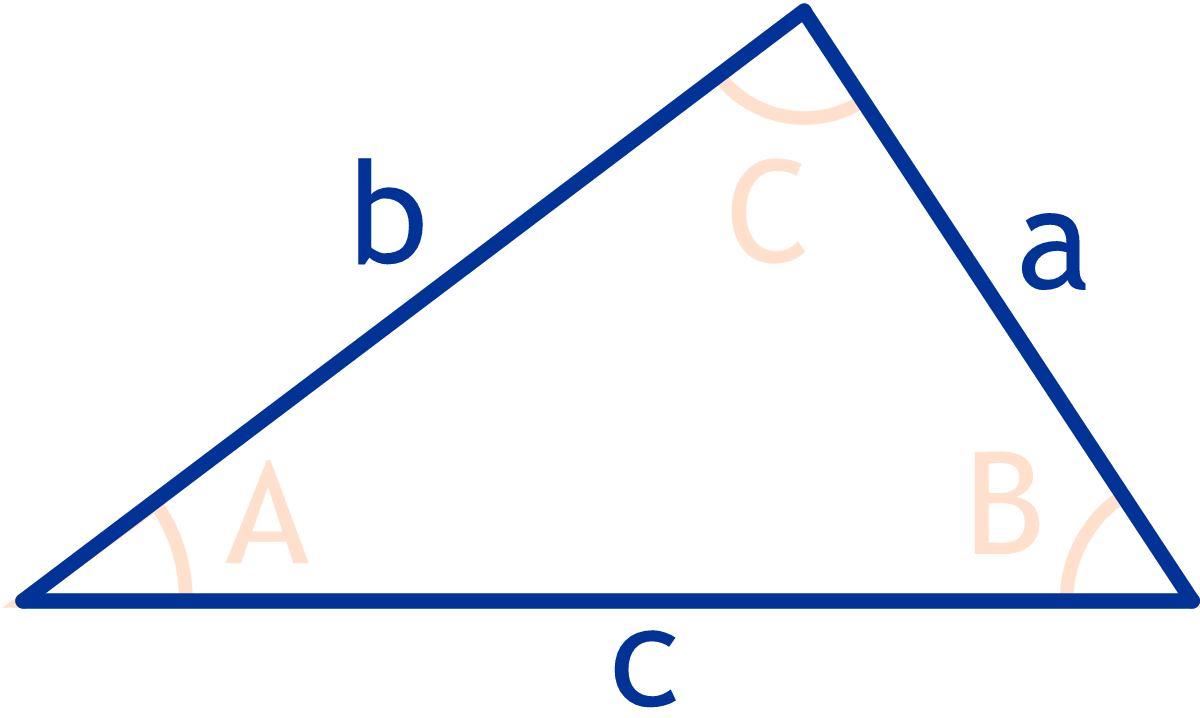
- Solving Triangles: Trigonometry allows for finding missing sides and angles in both right-angled and general triangles.
- Additional Functions:
- Cosecant (csc): Hypotenuse / Opposite
- Secant (sec): Hypotenuse / Adjacent
- Cotangent (cot): Adjacent / Opposite
- Identities: Trigonometric and triangle identities are equations that remain true for all triangles, providing tools for complex calculations.
Community reviews
No published reviews yet. Be the first to share your experience.