Physics Girl | How SMOOTHNESS of a SOCCER BALL affects curve | Season 1 | Episode 25 | PBS
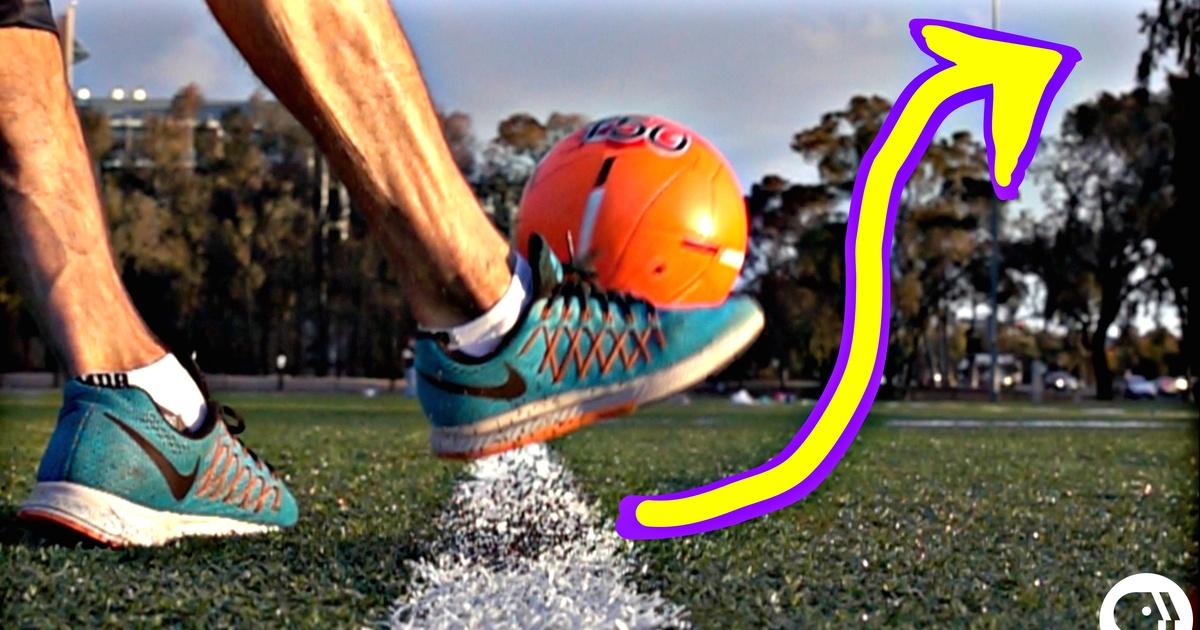
Curving and bending a ball using the magnus effect is common in every sport.
Overview
Added
March 25, 2026
Related situation
Audience
parent
Grade range
Grade 9 (Freshman)–Grade 12 (Senior)
Page kind
Video
Introduction
The Physics of the Reverse Magnus Effect
- The Magnus Effect: A phenomenon in fluid dynamics where a spinning object (like a soccer ball) curves in the direction of its spin due to the interaction between the ball's surface and the surrounding air.
- The Reverse Magnus Effect: A counterintuitive occurrence where a ball, kicked with the same spin as a standard shot, curves in the opposite direction.
- The Role of Surface Roughness:
- Standard soccer balls are rough, which typically creates a turbulent boundary layer of air, resulting in the standard Magnus effect.
- Extremely smooth balls can cause the boundary layer to become laminar (smooth and orderly), which triggers the reverse effect.
- Boundary Layer Dynamics:
- Laminar flow: Smooth, orderly air flow; separates from the ball surface more easily.
- Turbulent flow: Chaotic air flow; sticks to the curve of the ball more effectively.
- The reverse effect occurs when the boundary layer on one side of the ball becomes laminar while the other remains turbulent, causing the air to deflect in a way that pushes the ball in the opposite direction of a standard curve.
- Experimental Findings:
- Experiments at MIT demonstrated that adding a simple rubber band to a smooth ball (like a beach ball) can flip the Magnus effect back and forth.
- Data analysis using "Tracker" software showed that the acceleration caused by the Magnus effect on lighter balls can be comparable to the force of gravity.
- Key Contributors: Diana Cowern (Physics Girl) and aerospace engineer Nicole Sharp (FYFD).
Community reviews
No published reviews yet. Be the first to share your experience.